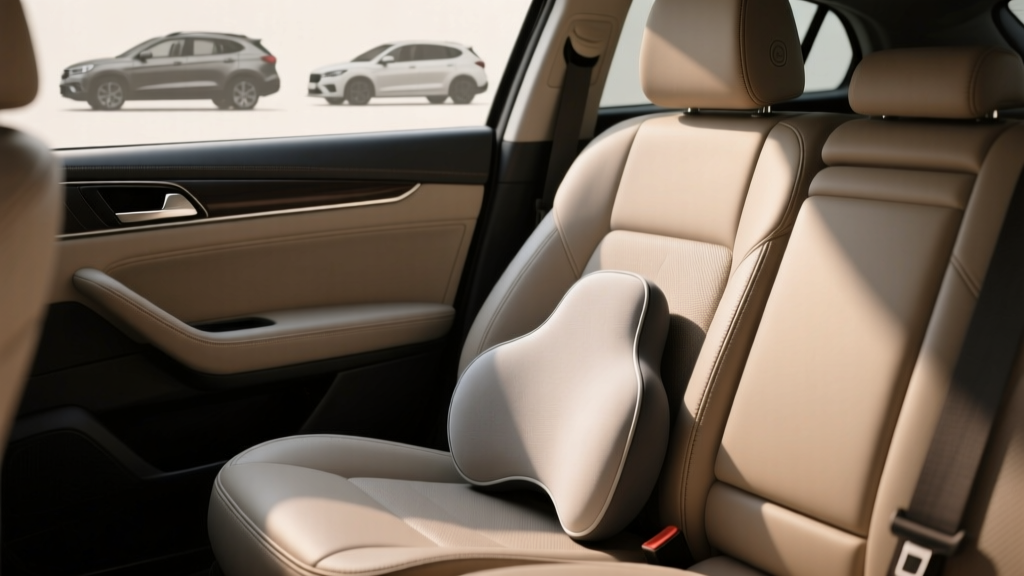
Coccyx Cushion Compatibility by Car Model (2026)
If you?ve ever finished a long drive feeling a deep ache at the base of your spine, you?re not alone. Tailbone (coccyx) discomfort is one of the most common ?silent? driving complaints?especially for commuters, rideshare drivers, road-trippers, and anyone recovering from back strain or injury. The right coccyx cushion can turn a painful cabin into a comfortable one, but only if it actually fits your car seat and your driving position.
Here?s the catch: coccyx cushions aren?t one-size-fits-all. A cushion that feels great in an office chair can sit too high in a sporty coupe, slide around on slick leather, or block a seat belt buckle in a compact sedan. This guide breaks down how coccyx cushions interact with real vehicle interiors, which cushion shapes match different seat designs, and what to look for by car model category so you can buy once and drive comfortably.
You?ll also find fit tips, setup steps, product-style comparisons (without hype), and common mistakes that cause cushions to feel ?wrong? even when they?re good quality.
What a Coccyx Cushion Does (and Why Car Fit Is Different)
A coccyx cushion typically uses memory foam or gel to reduce pressure on the tailbone by creating a relief channel or cutout at the rear. In a car, that pressure relief must work alongside:
- Seat angle and bolstering: Bucket seats can squeeze a cushion or tip it forward.
- Seat height and headroom: Adding 1?2 inches can change eye line, steering wheel reach, and mirror position.
- Pedal reach: A thicker cushion may force you closer to the wheel or reduce knee clearance.
- Seat belt geometry: The latch/buckle must remain accessible and the lap belt should sit on your hips?not your abdomen.
- Material friction: Leather and synthetic leather can be slippery unless the cushion has a grippy base.
Measure First: A Simple Compatibility Checklist
1) Check seat base dimensions
Use a tape measure and record:
- Seat base width (left to right) at the widest usable area
- Seat base depth (backrest seam to front edge)
- Distance to buckle from the inner edge of the seat
2) Consider seat style
- Flat bench-style seats: Accept most cushions; sliding is the main concern.
- Moderate bolsters (typical sedans/SUVs): Medium-width cushions fit best; avoid overly wide bases.
- Aggressive sport bolsters (performance cars): Choose a narrower cushion with a firm base so it doesn?t ?bridge? on bolsters.
3) Choose the right thickness
- Low profile (1.5?2.5 in): Best for low-roof cars, sports seats, and shorter drivers.
- Medium (2.5?3.5 in): Most versatile for daily drivers and crossovers.
- Thick (3.5?5 in): Useful for very upright seating or when more height improves comfort, but can compromise headroom and steering wheel alignment.
Cushion Types and Which Car Seats They Work With
U-Shaped Cutout (classic coccyx relief)
- Best for: Most sedans, crossovers, and SUVs with standard seat bases
- Watch for: The cutout should sit under your tailbone?not under your mid-back. If it?s too far forward, you?ll slump.
Center Channel Relief (groove rather than a big cutout)
- Best for: Sport seats with bolsters; drivers who dislike the ?edge? of a U-cutout
- Watch for: Some channels are too shallow for true tailbone unloading.
Wedge/Forward-Tilt Cushions (posture-focused)
- Best for: Drivers who experience pelvic tuck/slouching; upright vehicles like trucks and older SUVs
- Watch for: Can increase pressure on thighs; verify pedal comfort and circulation.
Gel-Top Hybrid Cushions
- Best for: Hot climates, long commutes, leather seats
- Watch for: Gel can feel firmer in cold weather; choose a model with stable foam support underneath.
Compatibility Guide by Car Model Category (with Real-World Fit Tips)
Rather than listing every trim level, the most reliable approach is to match cushion traits to the seat design common to each model family. Use these as starting points, then confirm measurements and buckle clearance.
Compact Cars (Honda Civic, Toyota Corolla, Mazda3, Hyundai Elantra)
- Typical seat traits: Moderate bolsters, shorter seat bases, lower roofline than SUVs
- Recommended cushion: Low-to-medium profile U-cut (about 2?3 inches thick) with a non-slip base
- Fit tip: Aim for a narrower width so the cushion doesn?t ride up on side bolsters. If the cushion is too wide, it can tilt and create a ?perched? feeling.
- Example: Civic/Corolla drivers often report better comfort with a cushion that has straps or grippy rubber dots to prevent sliding on cloth or synthetic leather.
Midsize Sedans (Toyota Camry, Honda Accord, Nissan Altima, Hyundai Sonata)
- Typical seat traits: More generous seat base depth, moderate bolstering, comfortable long-distance ergonomics
- Recommended cushion: Medium profile U-cut or channel relief (2.5?3.5 inches)
- Fit tip: Check that the cushion doesn?t cover the seat?s front edge contour?you want support under thighs without pushing into the backs of knees.
- Example: On long highway drives, Camry/Accord owners often prefer a gel-top hybrid to reduce heat buildup, especially with leather interiors.
Small SUVs/Crossovers (Toyota RAV4, Honda CR-V, Mazda CX-5, Subaru Forester)
- Typical seat traits: Slightly higher hip point, more upright posture, often wider seats
- Recommended cushion: Medium profile U-cut with a stable foam base; gel-top if you drive in warm weather
- Fit tip: Because these vehicles sit taller, you can usually tolerate a bit more thickness without headroom issues?but make sure your steering wheel and mirror positions still feel natural.
- Example: Forester owners who sit very upright sometimes do well with a slight wedge to reduce slouching, but only if it doesn?t cause knee pressure.
Full-Size SUVs (Chevrolet Tahoe/Suburban, Ford Expedition, Toyota Sequoia)
- Typical seat traits: Wide seat bases, upright posture, long-haul capability, lots of vertical space
- Recommended cushion: Medium-to-thick U-cut (3?4 inches) for deeper pressure relief
- Fit tip: Verify that the cushion doesn?t interfere with seat heating/cooling airflow?some perforated leather and ventilated seat fans work less effectively under dense foam.
- Example: Expedition road-trip drivers often pair a coccyx cushion with a lumbar support roll to keep pelvis and spine aligned over long distances.
Pickup Trucks (Ford F-150, Ram 1500, Chevrolet Silverado/GMC Sierra)
- Typical seat traits: Upright seating, sometimes flatter seat bases, lots of cabin room; work-truck trims may have firmer foam
- Recommended cushion: Wedge or U-cut depending on whether you need posture correction or pure tailbone relief
- Fit tip: If you feel like you?re slumping, a gentle forward tilt can help?but keep it mild to avoid sliding forward when braking.
- Example: Drivers who spend hours in an F-150 often report that a cushion with a carry handle is useful for swapping between work truck and personal vehicle.
Sports Cars and Performance Sedans (Mazda MX-5 Miata, Subaru BRZ/Toyota GR86, BMW 3 Series, Audi S-line models)
- Typical seat traits: Aggressive bolsters, lower roofline, lower seating position, more sensitive steering wheel reach
- Recommended cushion: Low-profile channel relief or narrow U-cut with firm support
- Fit tip: Avoid thick cushions that raise your hips too much?this can compromise helmet clearance (track days) and change your feel of the car?s controls.
- Example: BRZ/GR86 drivers often do best with a 2-inch cushion that doesn?t fight the seat bolsters and keeps a consistent ?locked-in? driving position.
Minivans and Family Haulers (Honda Odyssey, Toyota Sienna, Chrysler Pacifica)
- Typical seat traits: Comfort-oriented, upright, plenty of headroom; frequent stop-and-go and long trips
- Recommended cushion: Medium U-cut with breathable cover; gel-top if you run hot
- Fit tip: Choose a cushion that?s easy to remove and clean?family vehicles see more spills and crumbs than most.
- Example: Odyssey and Sienna owners who do school runs plus road trips often keep a cushion in the car and a second cover at home for quick washing.
Step-by-Step: How to Install and Adjust a Coccyx Cushion in Your Car
- Start with a clean seat base. Wipe down leather/synthetic leather to reduce sliding caused by dust and conditioners.
- Place the cushion with the cutout at the rear. The relief area should align under your tailbone, not under your lumbar spine.
- Center it between the bolsters. If the cushion bridges across bolsters, try a narrower model or rotate slightly until it sits flat.
- Secure it (if possible). Use straps around the seat back or headrest posts if the cushion includes them. If not, consider a grippy seat pad underneath.
- Sit and test your pedal reach. Your knees should be slightly bent at full brake press, and you should reach the steering wheel without locking elbows.
- Re-check mirrors and headrest height. Any height change can alter your sight lines and whiplash protection.
- Take a 15-minute drive. Good support should feel ?quiet? and stable. If you feel perched, numb, or sliding, adjust position or thickness.
Product-Style Recommendations: What to Look For (and What to Skip)
Best all-around for most sedans and SUVs
- Memory foam U-cut with medium thickness (2.5?3.5 in)
- Non-slip base plus at least one strap
- Breathable, washable cover (mesh or textured knit)
Best for sporty seats and low headroom cabins
- Low-profile channel relief or narrow U-cut (around 2 in)
- Firmer foam that doesn?t collapse on bolsters
Best for hot climates and leather interiors
- Gel-top hybrid with vented cover
- High-friction underside to prevent ?leather slide?
Features that often disappoint in cars
- Overly thick cushions that change driving posture too much
- Very soft foam that bottoms out and recreates tailbone pressure
- Slick covers that shift during braking and cornering
Common Mistakes to Avoid
- Buying based on office-chair reviews only. Cars have different seat angles, bolsters, and safety considerations.
- Ignoring buckle access. If the cushion blocks the seat belt latch or changes belt routing, it?s the wrong fit.
- Assuming thicker is better. Too much height can cause shoulder tension, poor mirror alignment, and reduced headroom.
- Placing the cutout in the wrong spot. If the relief channel isn?t under your coccyx, you can feel worse, not better.
- Skipping a posture check. Tailbone pain can be tied to slouching; sometimes a mild wedge or lumbar support improves results more than extra padding.
Practical Tips from Real-World Driving
- Test on your longest ?normal? drive. A cushion can feel great for 5 minutes and wrong at 45 minutes.
- Adjust seat tilt before blaming the cushion. A small change in front-edge height can reduce tailbone pressure dramatically.
- Keep a thin towel in the glovebox. If a cushion sits slightly high, a towel can level it or reduce sliding temporarily while you dial in fit.
- Pair with lumbar support when needed. If your pelvis rolls backward, a coccyx cushion alone may not stop slouching.
FAQ: Coccyx Cushions in Cars
Will a coccyx cushion raise my seating position too much?
It can. Low-profile cushions (around 2 inches) are usually safe for compact cars and sportier seating positions. If you notice reduced headroom, a changed steering reach, or you?re looking through the top of the windshield, downsize thickness.
Do coccyx cushions work on leather seats without sliding?
Yes, but choose one with a non-slip rubberized base and, ideally, a strap. Leather and synthetic leather are naturally slick, especially if conditioned.
Can a coccyx cushion interfere with seat heaters or ventilated seats?
Seat heaters still work, but dense foam can slow heat transfer. Ventilated seats may feel weaker because airflow can?t pass through solid foam. Look for a cushion with a breathable cover and consider a thinner design if you rely on ventilation.
Is a U-shaped cutout always best for tailbone pain?
Not always. Many drivers love U-cut cushions, but some prefer a center channel that feels smoother on bucket seats. If you feel an ?edge? under you, a channel relief style can be more comfortable.
How do I know if the cushion is the wrong size for my car?
Red flags include: the cushion sits on top of bolsters and rocks, it blocks the seat belt buckle, it pushes you too close to the steering wheel, or you slide forward during braking. Measure your seat base and compare it to the cushion dimensions before exchanging.
Can I use a coccyx cushion in the passenger seat too?
Absolutely. Many families keep one cushion that rotates between driver and passenger seats for road trips?just re-check belt buckle access and seating height each time.
Next Steps: Choose the Right Cushion and Dial In the Fit
Start by measuring your seat base and deciding how much extra height your cabin can tolerate. Match cushion shape to your seat style?narrower and lower for sporty bolsters, medium U-cut for most daily drivers, and gel-top options for hot climates or leather interiors. Once it arrives, take 15 minutes to install it carefully, confirm buckle access, and do a real test drive before committing.
For more comfort-focused interior upgrades and fitment tips, explore the latest guides on carinteriormix.com.